Custom Cabinets in Oakdale, MN
Straight numbers for a 1970 to 1999 town: what each budget tier buys, and which one your kitchen actually needs.
Oakdale is Woodbury's neighbor across I-94 and its opposite in one important way: the building is already done. About three in five Oakdale homes went up between 1970 and 1999, and only about one in twenty postdates 2010. The median home here runs roughly $320,000 against roughly $455,000 in Woodbury, which changes what a smart cabinet project looks like: the goal is a kitchen that fits the house and the numbers, not a showpiece the resale market will not repay.
Oakdale homeowners tend to start with a number rather than a room, and this page follows suit: three tiers, real figures for each, and a plain account of what each one can and cannot fix.
The 1970 to 1999 Kitchen
Oakdale's story compresses neatly: a township from 1858, incorporated in 1968, a city only since 1974, and then one enormous growth spurt. The historical society records the population soaring from just over 18,300 to more than 26,600 during the 1990s alone, roughly 8,300 people in one decade against about 1,700 in the two decades since. The houses came with them: 38 percent of the city's homes date to the 1970s and 80s, with another 23 percent from the 1990s, and four out of five units are single-family forms, the ramblers, split-levels, and modest two-stories of the tract-building years. One national housing-data firm puts it more bluntly, noting parts of town may carry the "Brady Bunch" look of homes popular in the 70s and early 80s.
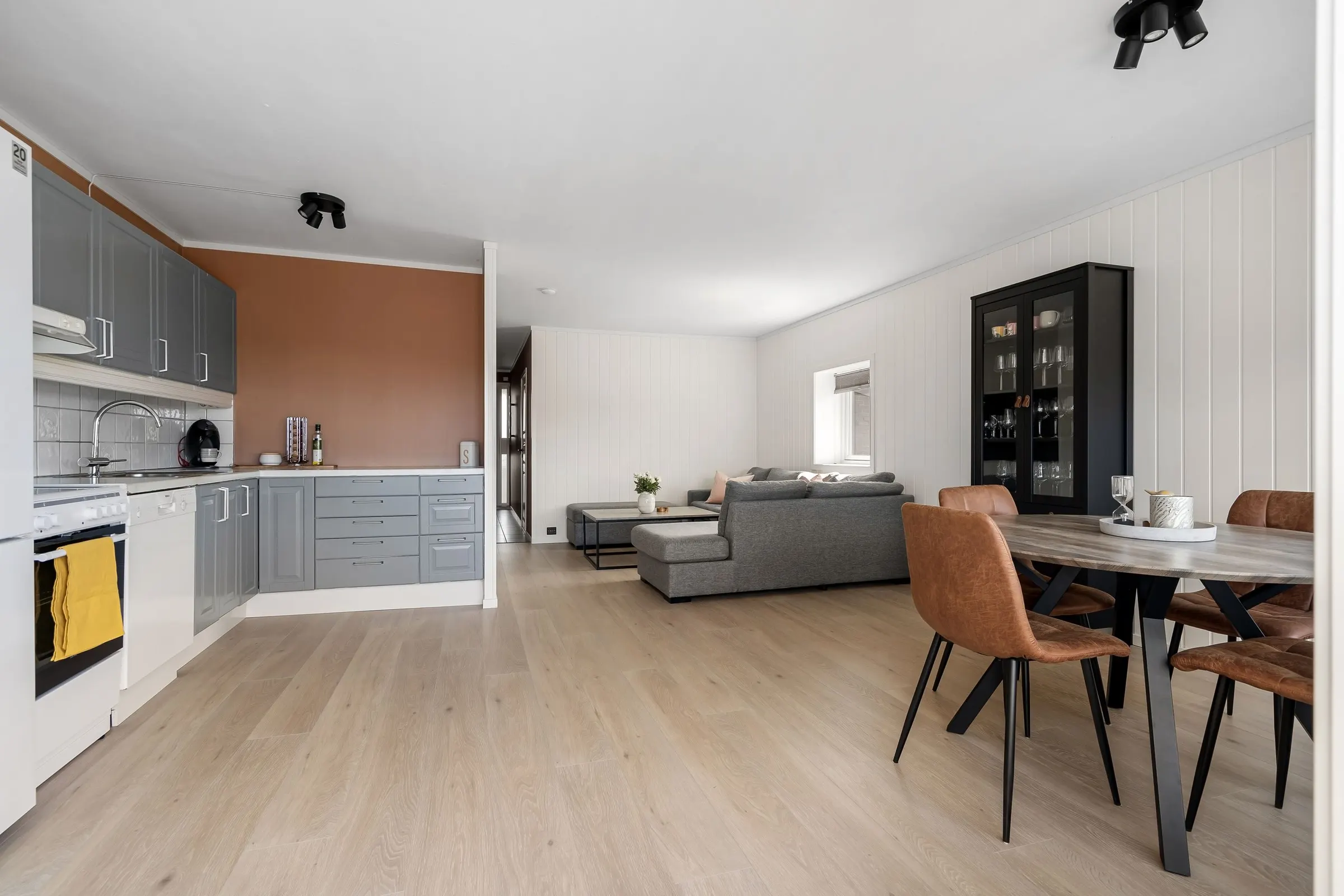
For kitchens, the era is specific. Builder-grade honey oak came standard in millions of American kitchens built roughly 1985 to 2005, and Oakdale's 1980s and 90s housing, about 44 percent of the city, sits squarely inside that window. Add the era's other signatures, soffits over 30-inch uppers, a peninsula where an island wants to be, laminate counters on their third decade, and you get the most common kitchen in this corner of the metro. Nothing about it is broken. Most of it is one well-chosen project from current, which is exactly why the budget tiers below matter.
The Smallest Tier: Hardware, Hinges, and Honest Advice
The cheapest tier is smaller than the internet suggests, so here is the honest version. At the bottom of the ladder sits the hardware refresh: new pulls and knobs across the kitchen, soft-close hinges swapped in, doors realigned so the reveals read straight again. It is the least expensive work a cabinet company does, it is a visible upgrade on a sound 1990s kitchen, and the written estimate prices it by your door count. What this tier does not buy is professional painting: a full-kitchen repaint done right runs about $2,000 to $6,500, roughly $100 per door, and oak needs its open grain filled before paint or the grain telegraphs through. If a video made refinishing look like a weekend project, the gap between that video and a durable finish is exactly what you would be paying a professional for. We will tell you at the measure whether your kitchen deserves this tier or is ready for the next one.
The $5,000 to $10,000 Neighborhood: Refacing Territory
This is Oakdale's sweet spot. Cabinet refacing replaces every door and drawer front and veneers the frames to match, and the national envelope runs $4,501 to $10,546, with laminate packages near the bottom, wood veneer in the middle, and new solid wood doors at the top. It lands 30 to 50 percent below full replacement, takes two to five days on site, and the kitchen keeps working the whole time. The qualifier is the boxes, which must be square, dry, and solid, and the good news is that builder-grade boxes from this era are typically structurally sound, so most kitchens qualify. Refacing is also the proportionate play here: it delivers the visual outcome of a new kitchen while leaving your resale math intact. The cost guide has the full tier-by-tier arithmetic and a calculator for ballparking your own project.
The Top Tier: New Cabinets for a 1990s Layout
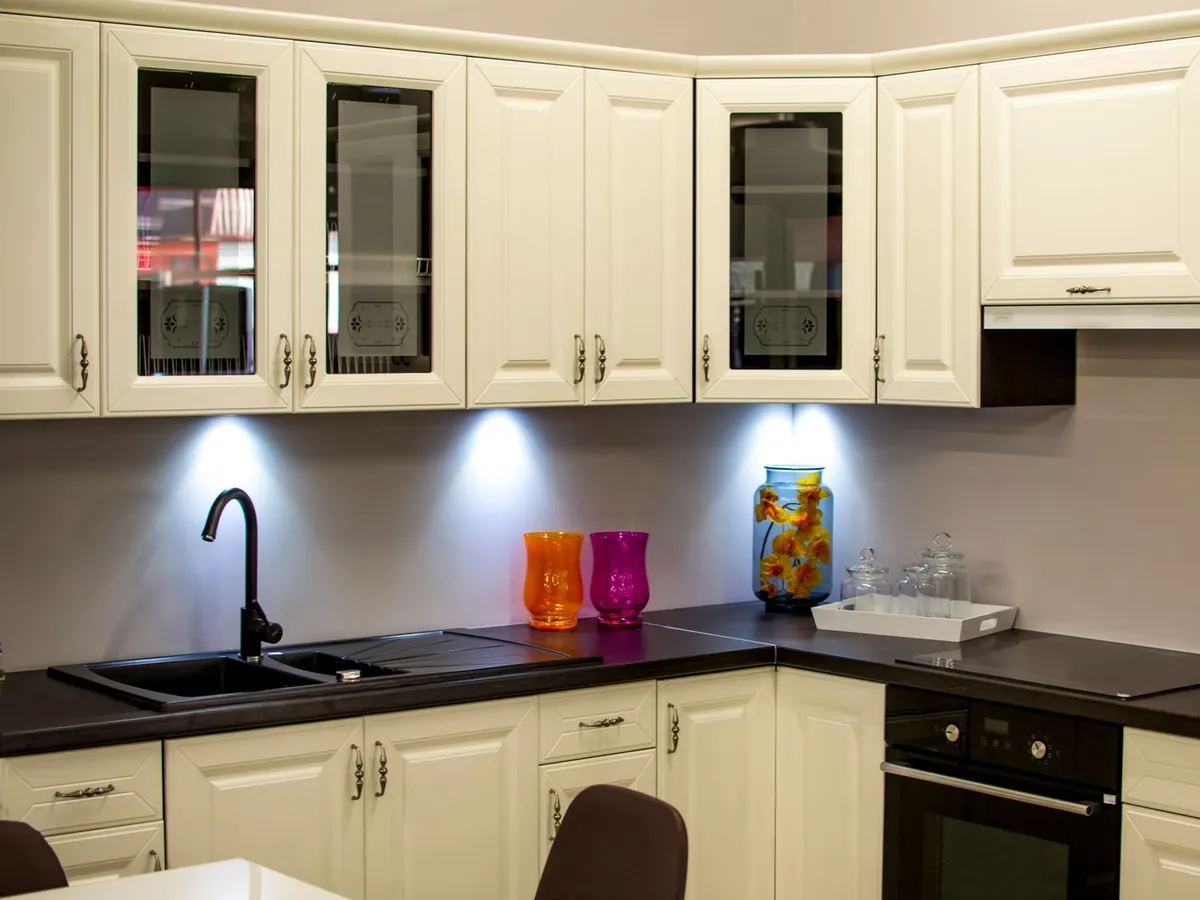
Some problems no door can fix. A galley that should open to the living room, a corner the lazy Susan gave up on decades ago, a pantry the floor plan never provided: those are layout problems, and layout problems mean new cabinetry. For most Oakdale kitchens the right tier is semi-custom, $150 to $650 per installed linear foot, factory-modified sizes with a wide door and finish catalog, with full custom work at $500 to $1,200 per foot reserved for the walls the catalog cannot solve. A typical kitchen carries about 30 feet of cabinetry, so a semi-custom project can land anywhere from roughly $4,500 to $19,500 depending on the catalog, while a full custom kitchen runs $15,000 to $36,000. This is also the tier where the era's quirks become opportunities: the soffit comes out where it is empty, uppers grow to the ceiling, and the drawer stack finally gets sized to the pots you own instead of the pots 1994 assumed.
The Gold Line Corner of Town
One part of Oakdale is genuinely new. The METRO Gold Line opened March 22, 2025, a 10-mile, $505 million bus rapid transit route and the first in Minnesota to run primarily in its own lanes, with two of its stations in Oakdale at Helmo and Greenway. The corridor puts nearly 100,000 jobs within reach, including the 3M world headquarters one town west across Century Avenue in Maplewood, and the development followed fast: at Helmo Avenue and 3rd Street, a seven-story, 328-unit apartment building went up in what was recently an empty field. New units at that pace mean new storage problems, and townhomes and apartments reward built-to-the-wall thinking: closet systems that make one closet do the work of two, and laundry cabinetry that turns a machine closet into an actual room. For the rest of Oakdale, the station district is simply proof the city is still moving, Tanners Lake ice harvest to bus rapid transit in under a century.
Oakdale Cabinetry Questions, Answered
Do you serve Oakdale?
What should I budget for a 1980s or 1990s oak kitchen?
Is full custom cabinetry worth it in a $320,000 house?
Can the soffit above my cabinets be removed?
What is the smallest project you will take on?
How long do these projects take?
Start With the Budget, Not the Catalog
Bring the kitchen you have and the number you are comfortable with. The drawings and the written estimate meet you there.