Cabinet Refacing and Refinishing in Woodbury, MN
New doors, drawer fronts, and finishes on the boxes you already own, at 30 to 50 percent less than replacement, priced in writing first.
Request an Appointment
Name and phone are all it takes to start. We reply within one business day.
The average kitchen refacing job in this country runs about $7,220. For that money you get new doors, new drawer fronts, new hinges, and matching veneer over every surface you can see, while the cabinet boxes, the countertops, and the plumbing stay exactly where they are. What you skip is the demolition, the dumpster, the weeks of takeout, and roughly half the bill of a new kitchen.
That is the premise of cabinet refacing: everything you see and touch becomes new, everything structural stays. The boxes screwed to your walls are usually the healthiest part of a tired kitchen, which makes paying to rebuild them the most skippable expense in remodeling.
What Cabinet Refacing Includes
A full reface touches every visible surface in a fixed order. Here is the complete package:
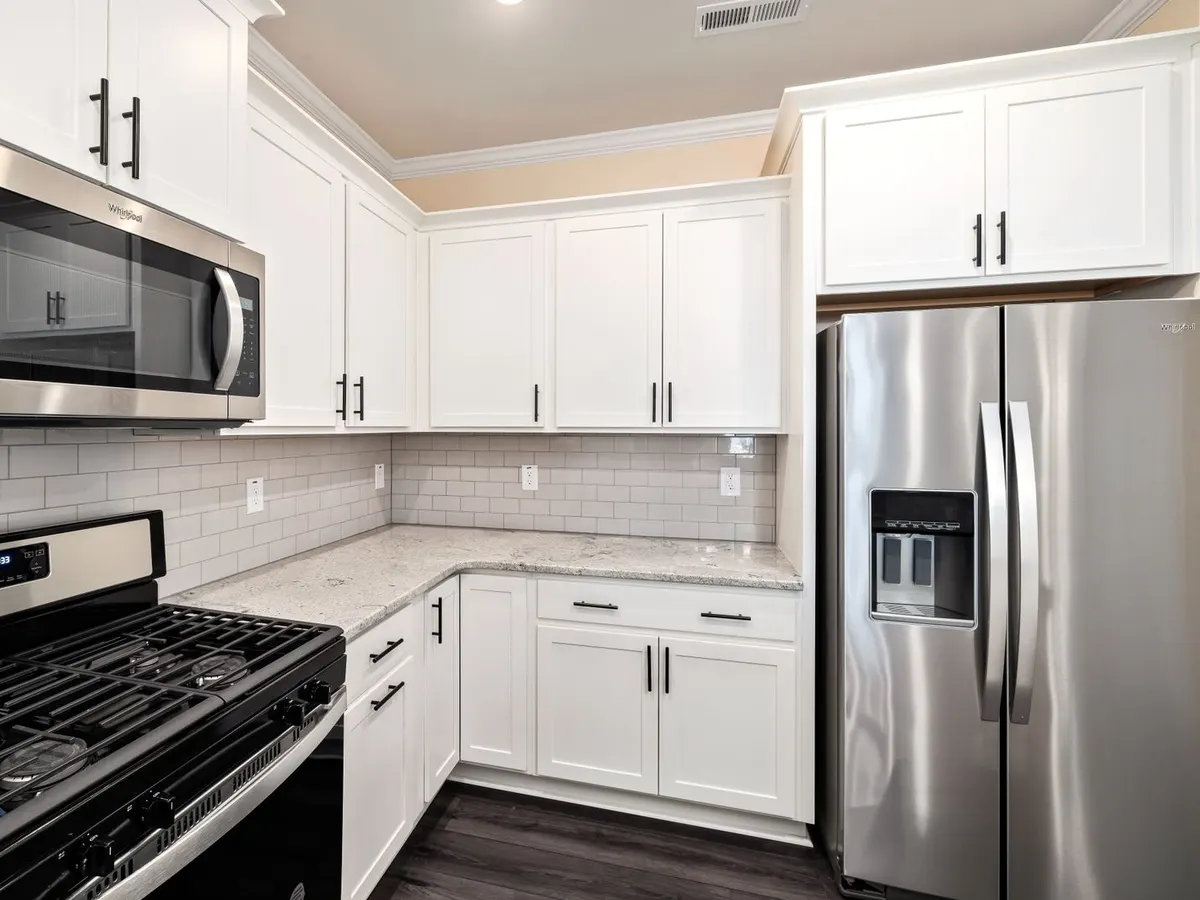
- New doors. Any style, wood, or finish, sized to your existing openings, so a flat-panel walnut kitchen can come out of a raised-panel oak one.
- New drawer fronts. Matched to the doors, because fronts age faster than anything else in the room.
- Veneer over the face frames and exposed ends. The step people forget, and the one that makes the whole kitchen read as new rather than as old boxes with new doors.
- New hinges and slides. Adjustable soft-close cup hinges replace whatever 1990s hardware was back there.
- The optional layer. New drawer boxes, rollout trays, new pulls and knobs, and molding to finish the tops of the uppers.
Materials come in three families: rigid thermofoil and laminate at the budget end, wood veneer in the middle, and solid wood doors at the top. The family you pick sets both the look and most of the price.
Refacing, Refinishing, or Full Replacement
Three ways to fix a tired kitchen, in ascending order of money and disruption.
Refinishing keeps every door you own and changes the color: sand or strip, then paint or stain, typically $3 to $10 per square foot and around $100 per door done professionally. It is the cheapest path and the most limited one, because the door style stays. On oak it comes with homework: open grain telegraphs through paint unless each door is grain-filled first, and that filling is where the labor hides.
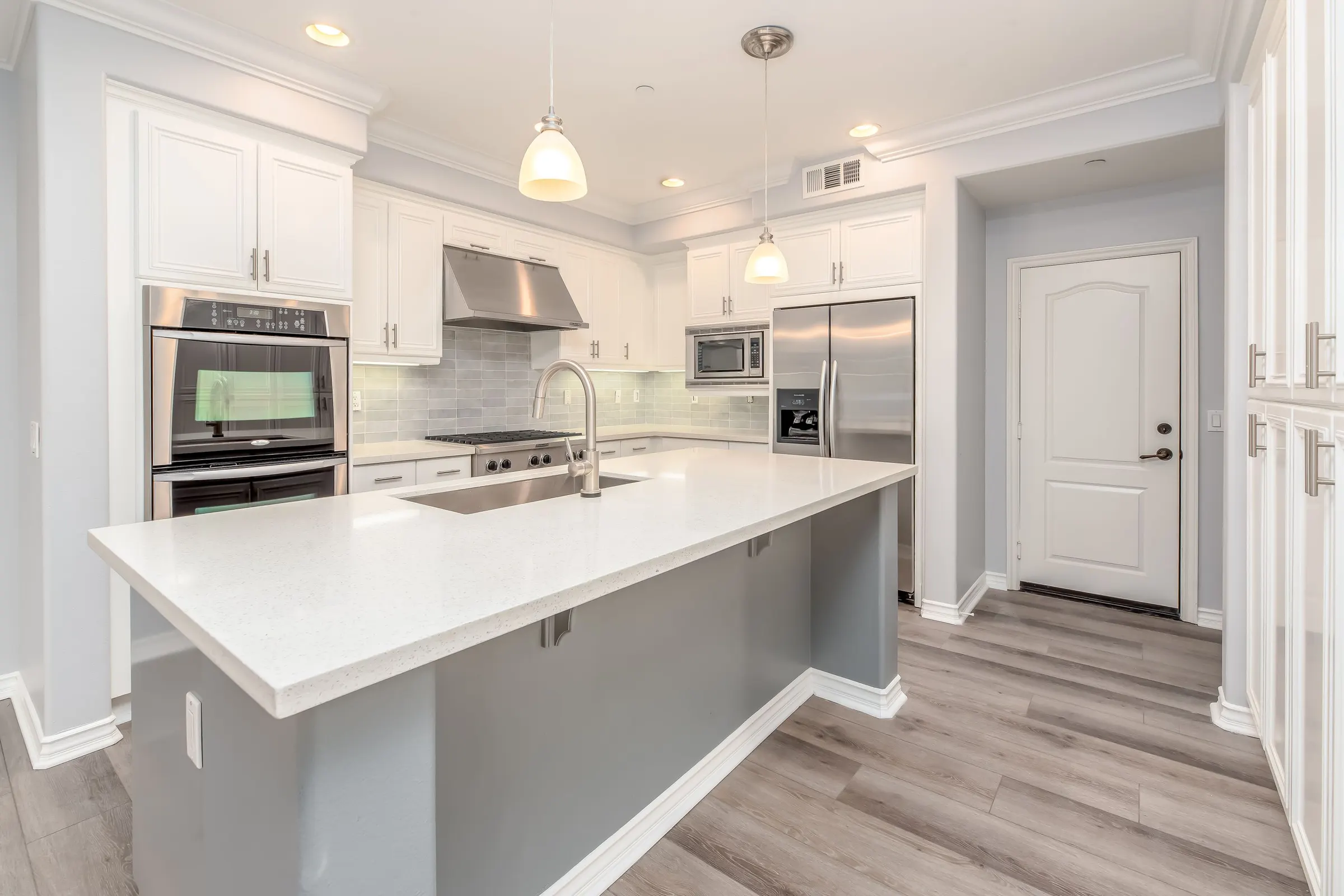
Refacing replaces the doors and drawer fronts and veneers everything else, for 30 to 50 percent less than replacement and days of work instead of weeks. It is the value play when the boxes are sound and the layout already works.
Replacement is the answer when the room needs to change, not just the surfaces: more storage, a different island, a wall opened up. It costs the most and fixes the most. When the layout itself is the problem, the custom kitchen cabinets page covers that route from drawings to installation.
Does Your Kitchen Qualify
Refacing has one hard requirement: the boxes have to be worth keeping. Open a base cabinet, the sink base especially, and check your kitchen against this list.
- Doors and drawers sit square in their openings, and the boxes have not shifted or racked.
- The cabinet floors, the sink base floor above all, are flat and dry, with no swelling or delaminating panels.
- Shelves hold weight without sagging, and the face frames are solidly attached.
- The layout works for you. Refacing keeps it exactly as it is.
Sagging shelves, water-swollen particleboard, delaminating interiors, or any sign of mold are disqualifiers, and so is a floor plan you resent. The sink base is where kitchens fail first: a swollen floor panel means a leak came before you, and that panel and its cause get fixed before any cosmetic dollar makes sense. If your kitchen fails the list, hearing that early costs you nothing; refacing a failing kitchen just decorates the problem.
The Honey Oak Kitchens of 1990s Woodbury
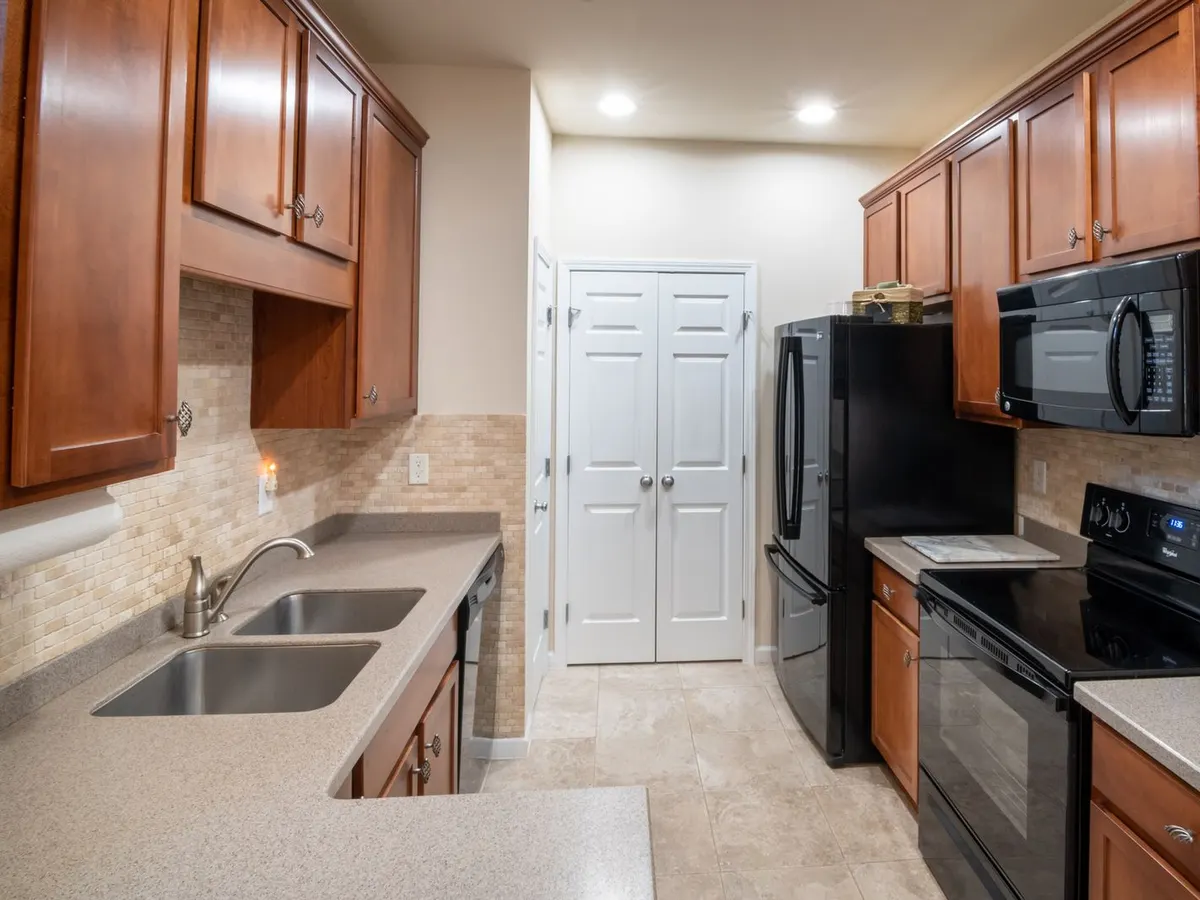
Census surveys count 8,460 Woodbury housing units built in the 1990s alone, and the industry's own histories put golden oak as the standard cabinet in American builder homes from roughly 1985 to 2005. Put those two facts together and the local math is obvious: this city holds thousands of kitchens where the doors are dated but the boxes underneath were screwed together in an era of sturdy, simple construction and have spent three decades doing nothing but holding dishes. Those kitchens are exactly what refacing was invented for. There is a proportion argument too. The median Woodbury house is worth around $455,300 by recent estimates, so a refacing project at the national average is under two percent of the home's value, applied to the room that works the hardest.
Cabinet Refacing Cost and the Savings Math
The national numbers first: refacing runs $4,501 to $10,546, and the two big cost guides publish averages ten dollars apart, $7,220 and $7,230, which is about as much agreement as this industry ever produces. Within that range, the material family does the deciding. Laminate and rigid thermofoil packages run roughly $1,000 to $3,000, wood veneer $2,500 to $6,000 with premium species climbing higher, and new solid wood doors $5,000 to $10,000.
The savings come from what never happens. Nothing is demolished, so nothing is hauled or dumped. No new boxes are built, and boxes are most of what cabinetry costs, which is how full custom replacement reaches $500 to $1,200 per linear foot while refacing does not. Labor is measured in days instead of weeks. Stack those together and the 30 to 50 percent savings claim stops being marketing and starts being arithmetic. Every project here gets that arithmetic in a written estimate before anything is ordered.
Approximate Cost Calculator
Two picks get you a broad planning range from national cost guides.
Every project is different. Walls, materials, finishes, and interiors move real numbers in both directions, so treat this range as a budget planning starting point, not a quote. The real number comes from a measure and arrives in writing.
How the Work Goes, Day by Day
A typical refacing runs two to five days on site, and the kitchen works the whole time. The old doors and drawer fronts come off first, which is the only demolition the project has. The face frames and exposed ends get veneered, the new doors get hung on adjustable soft-close hinges, the fronts go on, and the last day is alignment: reveals evened, doors adjusted, hardware set. The sink keeps running, the stove keeps cooking, and there is never a week where the kitchen is a room full of dust with no cabinets in it. For a household that cannot exit to a rental during a remodel, that schedule is half the argument for refacing.
Cabinet Refacing Questions, Answered Straight
How much does cabinet refacing cost?
Is cabinet refacing worth it?
How long does cabinet refacing take?
How long do refaced cabinets last?
What is the difference between refacing and refinishing cabinets?
Can you just replace cabinet doors without full refacing?
Find Out If Your Boxes Qualify
Send two photos, the doors and the inside of the sink base, and you will get a straight answer with a written estimate.